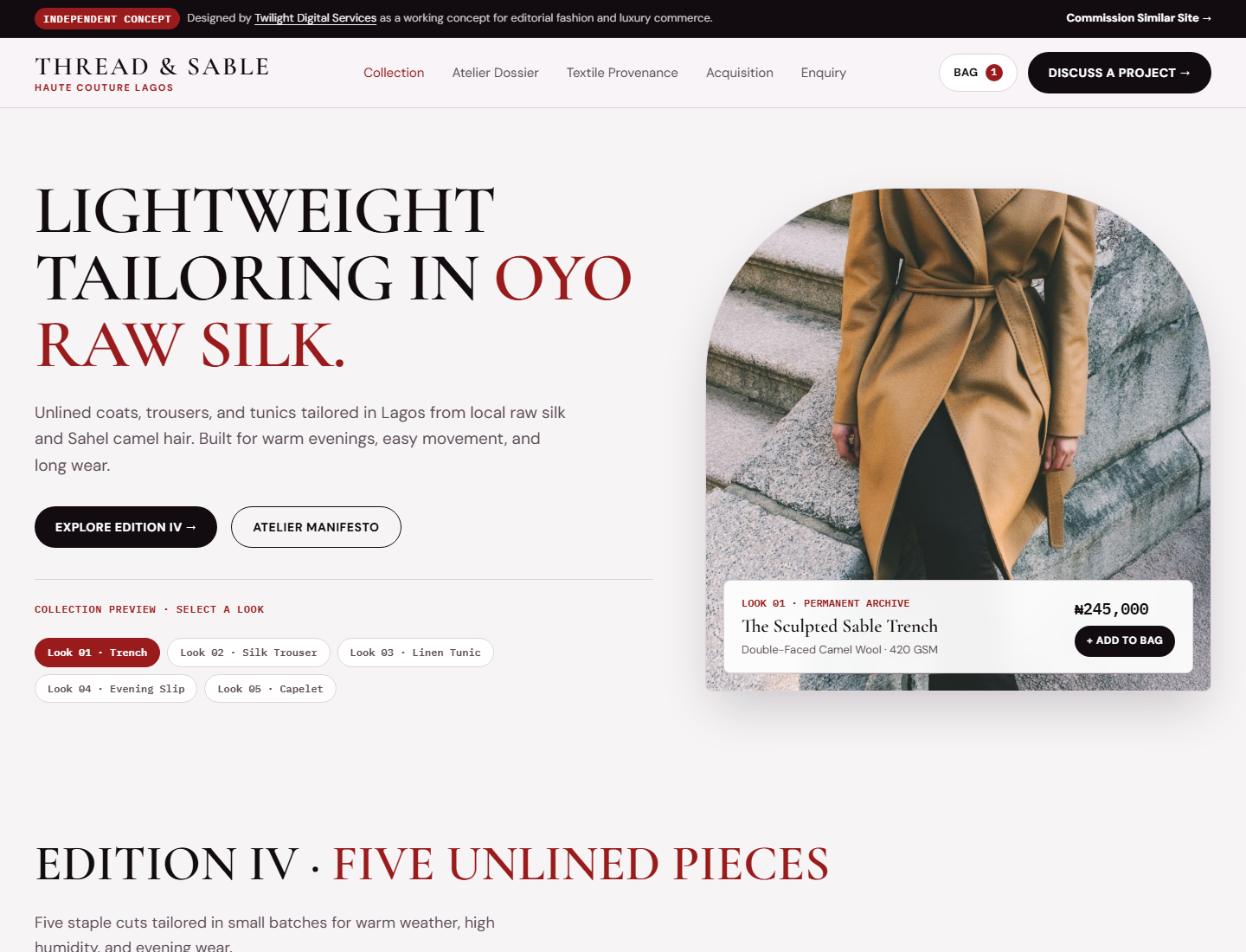
Five permanent cuts
Rather than releasing dozens of fast-turnover seasonal items, the atelier refines five staple silhouettes designed for warm weather and evening wear.

Independent concept / Tailoring & textile provenance
A website concept for an independent atelier tailoring unlined coats, trousers, and tunics in Lagos from handwoven Oyo raw silk, Sahel camel wool, and washed Belgian flax.
The strategic opportunity
Many luxury clothing websites rely on brand prestige, full-bleed runway video clips, and vague descriptions of their materials. Discerning buyers who spend significant money on tailored garments often have to dig through email threads just to find basic facts like fabric weight in grams per square meter, seam finishing, or chest measurements.
Thread & Sable explores a clearer digital storefront for independent fashion houses. The atelier cuts garments specifically for warm evenings and tropical humidity, using unlined 280 GSM Oyo spun raw silk, double-faced Sahel camel fleece, and wet-spun Belgian linen without stiff polyester interlinings.
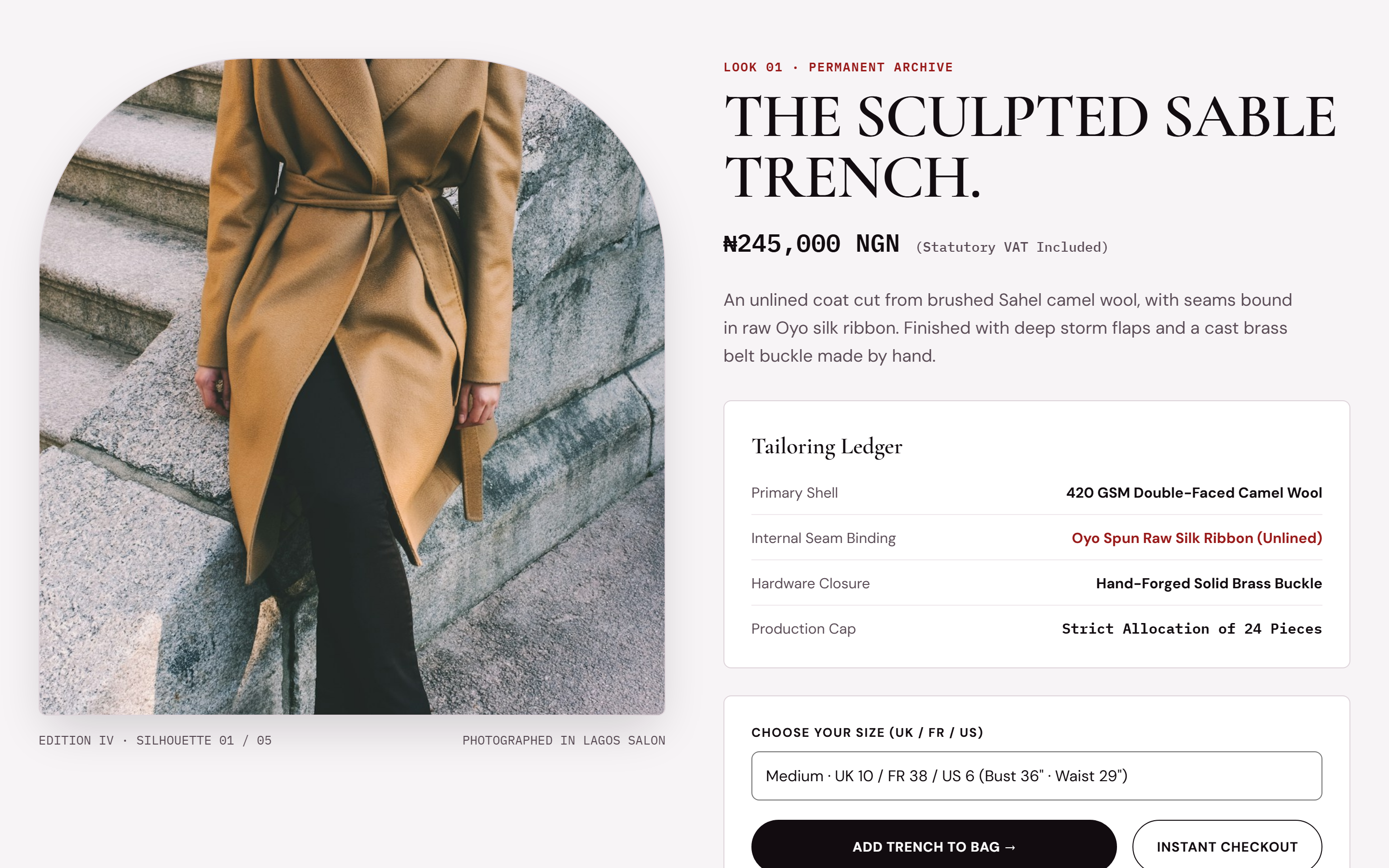
The site gives each piece a dedicated tailoring ledger. Instead of hiding details behind marketing slogans, every look lists its exact fabric weight, weaving method, botanical dye ingredients from Abeokuta, and garment dimensions across UK, French, and US sizes.
The strategic direction
The concept focuses on small-batch tailoring, listing full fabric origins and total delivery costs before buyers confirm an order.
Rather than releasing dozens of fast-turnover seasonal items, the atelier refines five staple silhouettes designed for warm weather and evening wear.
Fabric weight, fiber origin, spinning method, and natural dye ingredients are listed openly for each piece.
Delivery charges, taxes, international courier options, and a seven-day exchange window are displayed before checkout.
The experience in detail
How Thread & Sable communicates material quality and tailoring details across each page.
Unlined coats, tunics, trousers, and capes designed for equatorial climates, using lightweight natural fibers that drape without synthetic fusing.
Documents where each fiber is grown, harvested, and spun, celebrating small-batch Nigerian weaving and chemical-free botanical dye pots.
Detailed fit tables show exact chest, sleeve, and waist dimensions, helping overseas buyers choose the right size on the first try.
An interactive checkout flow that demonstrates consumer transparency under Nigerian FCCPC guidelines.
Interface gallery
Unhurried collection layouts and detailed garment dossiers.
 Expand ↗
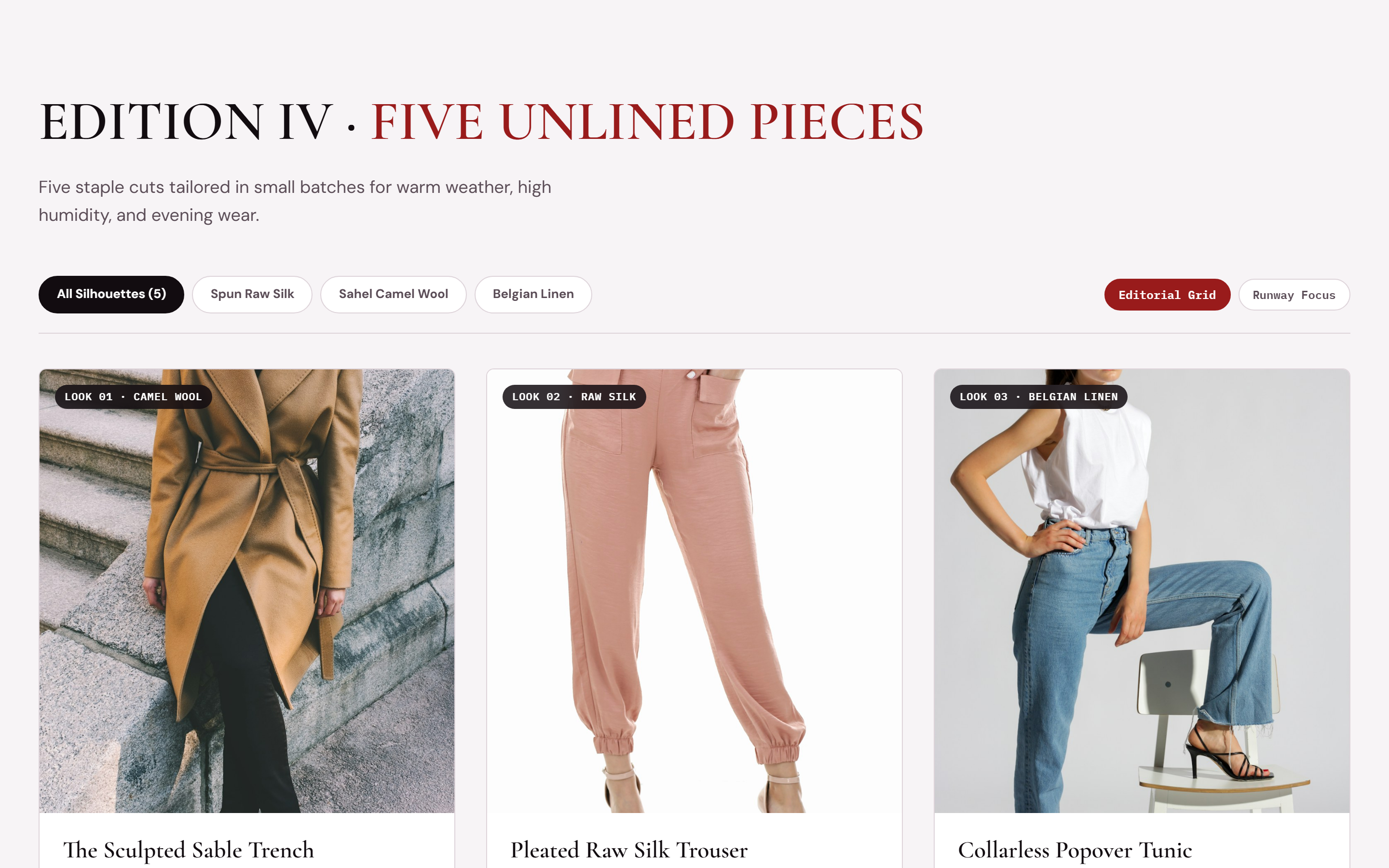
Collection grid showing unlined camel fleece trenches, raw silk trousers, and flax linen tunics.
 Expand ↗
Look dossier detailing fabric weight in GSM, hand-bound seam construction, and international size conversions.
Design choices
How the digital styling matches the subtle texture of raw spun silk.
Champagne neutrals and dark velvet tones match the color of untreated raw silk and camel fleece.
High-contrast editorial titles paired with simple technical sans text make measurement ledgers easy to scan.
Generous spacing around garment photography lets shoppers inspect seam stitching and fabric texture without distractions.
Strategic impact
What this exploration demonstrates for fashion studios, bespoke ateliers, and textile makers.
“When a clothing atelier shares honest fabric details and exact measurements upfront, overseas buyers feel safe purchasing high-value pieces.”
Twilight Digital Services · Design ExplorationsPublishing fiber origin, weaving methods, and artisan hours helps shoppers understand why small-batch tailoring costs more.
Giving exact sleeve and chest measurements reduces sizing mistakes and costly international return shipping.
Focusing on five well-made cuts avoids the inventory waste and heavy discounting common in fast fashion.
Experience the prototype
Explore the staple cuts, review the garment ledgers, and test the checkout flow, or talk with us about designing an online store for your fashion label.